Press Release: Newsweek Honors 250 Medal of Honor Recipients in Special July 4th Edition Celebrating America’s 250th Anniversary
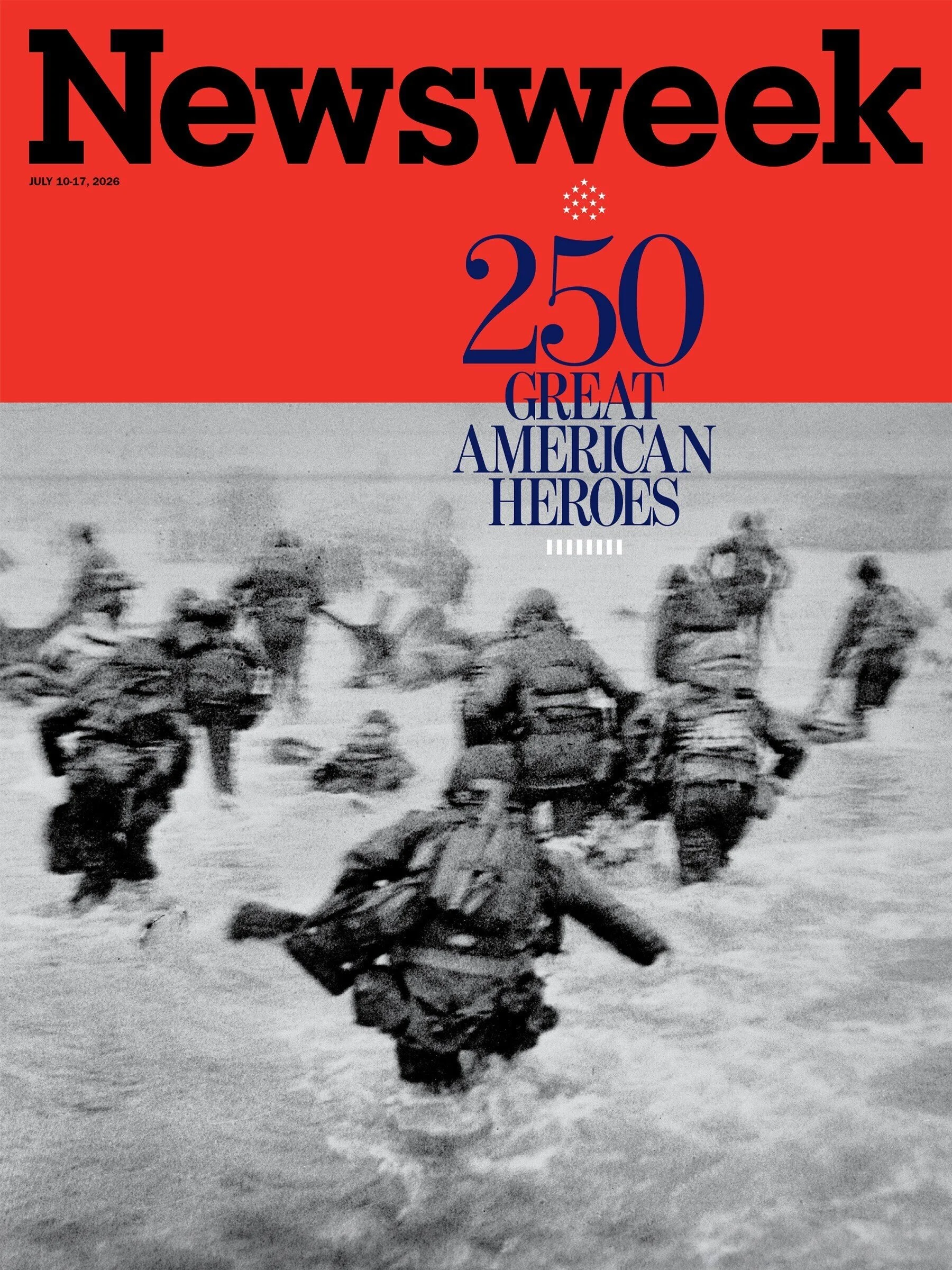
New York, New York — Newsweek Magazine has published a special July 4th edition in partnership with the National Medal of Honor Museum, commemorating 250 years of American history since the signing of the Declaration of Independence.The Magazine chose to tell the stories of 250 Medal of Honor recipients, including Sgt. William Shemin and Henry Johnson.
Entitled 250 Great American Heroes, the special edition highlights the extraordinary lives and service of 250 Medal of Honor recipients, including Sgt. William Shemin and Henry Johnson.
As Newsweek explains, the Medal of Honor “is meant to honor something specific: the moment when a human being, under the most extreme duress imaginable, chooses to place the life of another over their own.”
Of the more than 40 million Americans who have served in the U.S. Armed Forces, only 3,536 have received the nation’s highest military decoration. This new series highlights 250 of those Recipients, offering readers the opportunity to learn more about these remarkable Americans, including their lives, acts of courage, and enduring legacies.
The National Medal of Honor Museum served as the editorial partner for this project, helping to ensure that these stories were told with the accuracy, care, and respect they deserve. The collaboration reflects the Museum’s mission to preserve and share the stories of all 3,536 Medal of Honor recipients, helping future generations understand the courage, sacrifice, and service represented by the Medal.
Newsweek will continue to feature the stories of other Medal of Honor recipients throughout America’s 250th year.
The full article appears below.

The Vesle River was running through German-controlled ground near Bazoches, France, in August 1918, and the open field between the American trench line and the wounded men lying in it was a killing ground. Between August 7 and August 9, 1918, a three-day stretch, Sergeant William Shemin of Company G, 47th Infantry Regiment, 4th Division, ventured out of the trench three times and pushed forward.
He went the first time with machine guns opening on him. He went the second time knowing what machine guns felt like to run through. He went the third time anyway. Each crossing—150 yards of exposed ground, German fire pouring across it—brought back a man who could not have made it out alone. When the officers and senior noncommissioned officers of his platoon had been knocked out of action, Shemin took command and held the position together, leading under fire, until August 9 when a burst of shrapnel and a machine gun round found him. A machine gun bullet struck his helmet and became lodged behind his left ear.
He survived, spending three months in a hospital, then on light occupation duty in Germany and Belgium, before returning home to New Jersey in August 1919. Following his discharge from the Army, he pursued studies at the New York State College of Forestry at Syracuse University, finished his degree, and then went on to found a greenhouse and landscaping business in the Bronx. He raised three children. He had been a forester before the war and he became one again—a man more comfortable with growing things than with the business of dying. He lived until 1973.
The Army originally gave Shemin the Distinguished Service Cross, which is not a small thing. But in 2001, the Army began reviewing its World War I awards to Jewish soldiers, examining whether antisemitism had kept some men from the recognition their actions had earned. Shemin's cross was one of those reviewed. The conclusion was that it should have been something else.
On June 2, 2015, President Barack Obama stood in the White House beside Shemin's daughters, Elsie Shemin-Roth and Ina Bass, and placed the Medal of Honor into their hands—awarded after death to a man who had crossed 150 yards of open ground on three occasions, who had taken a round near his ear and come home to nurture plants and see them thrive, and who had been gone for 42 years before the nation corrected the record.
From the Medal of Honor Museum Archives: Shemin was a boxer, long-distance swimmer, and semi-professional baseball player, earning 50 cents per game when he was just 15 years old. Though his Medal of Honor was not awarded in his lifetime, his family has made it their mission to share his legacy and that of Private Henry Johnson, whose Medal of Honor was awarded in the same 2015 ceremony.
Before dawn on May 15, 1918, two men held a sentry post at the edge of the Argonne Forest, and at least 12 German soldiers came through the dark to take them.
Private Henry Johnson, a former redcap porter from Albany, New York, serving with Company C of the 369th Infantry Regiment, was one of those two men. What followed in the next few minutes was among the most ferocious acts of individual combat in the American experience of the First World War. Johnson opened up with grenades as the raiders closed in. When the grenades were gone, he swung his rifle. Then he pulled his bolo knife.
By then he had already taken wounds—21 in total before it was over. His fellow soldier, Private Needham Roberts, was badly hurt and being dragged away into the dark by enemy soldiers intent on hauling him back behind German lines as a prisoner. Johnson went after them. Gravely wounded, alone, armed with a knife, he closed the distance and overcame the two captors. Roberts was not taken. The raiding party retreated, leaving behind weapons, equipment and abandoned intelligence.
The 369th was a regiment the United States Army had not wanted to put in the fight. The American Expeditionary Forces commander had lent the regiment—along with other Black units—to the French Army in part because some white American soldiers refused to serve alongside Black troops. The Army's own headquarters had distributed a pamphlet warning French civilians about the supposed dangers of African American soldiers. The 369th, which had come to France still known as the 15th New York Infantry of the New York National Guard, trained and fought under French command, equipped with French rifles and French helmets, attached to the French 161st Division. They would later be called the Harlem Hellfighters. In recognition of the valor he had displayed in battle, the French government bestowed upon Johnson the Croix de Guerre, complete with a star and bronze palm. His own country took longer.
He came home a sergeant, rode down Fifth Avenue in a victory parade in February 1919, and briefly drew crowds on a lecture tour. Then he said plainly what had happened to Black soldiers in the war—the exclusion, the harassment, the hostility from their own Army—and the engagements dried up. A warrant was issued for wearing his uniform past the prescribed date. He died in 1929, poor and largely forgotten.
The Purple Heart came in 1996. The Distinguished Service Cross followed in 2002. Nearly a century after that night in the Argonne Forest—when a single wounded soldier armed only with a knife battled to save his comrade, refusing to abandon his duty despite his nation's indifference to his service—President Barack Obama awarded Johnson the Medal of Honor posthumously. The ceremony, held on June 2, 2015, at the White House, saw Command Sergeant Major Louis Wilson of the New York National Guard accept the medal on Johnson's behalf.
From the Medal of Honor Museum Archives: Henry Johnson's story has been unofficially adopted by the family of William Shemin. After realizing Johnson had no living family to carry on his legacy during the joint Medal of Honor ceremony in 2015, the Shemins pledged to share the two stories together forever more. Now, whenever William Shemin's Medal of Honor story is told, Henry Johnson's is shared as well.
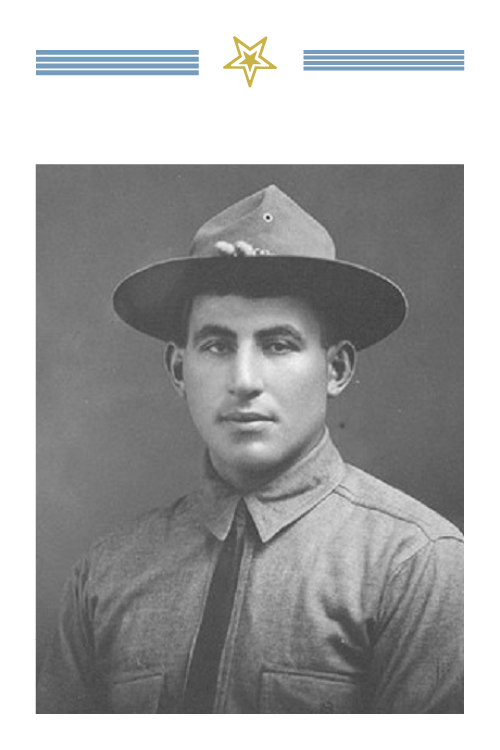
William Shemin Army · World War I Aug. 7–9, 1918 · France
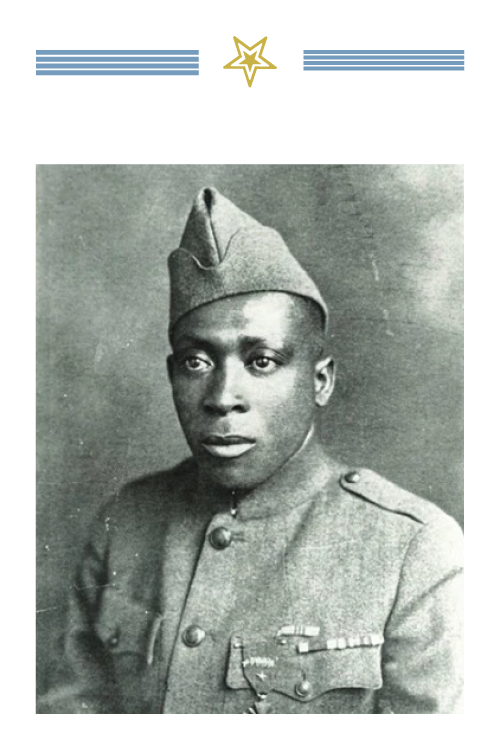
Henry Johnson Army · World War I May 15, 1918 · France